

Research
We are currently focused on three aspects of viruses and how they interact with the host:
- How do viruses enter cells? How do they maintain responsiveness to host factors and receptors, while protecting functional centers from attack by antibodies?
- How does the host adaptive immune response overcome virus’s evolved mechanisms of immune evasion?
- Can we understand the adaption of viruses to new hosts or immune landscapes in terms of the conformational dynamics of envelope glycoproteins?
- How do dynamic processes inside virions regulate virus replication?
We aim to answer these questions through the biophysical interrogation of the conformational and compositional dynamics of viral macromolecules.
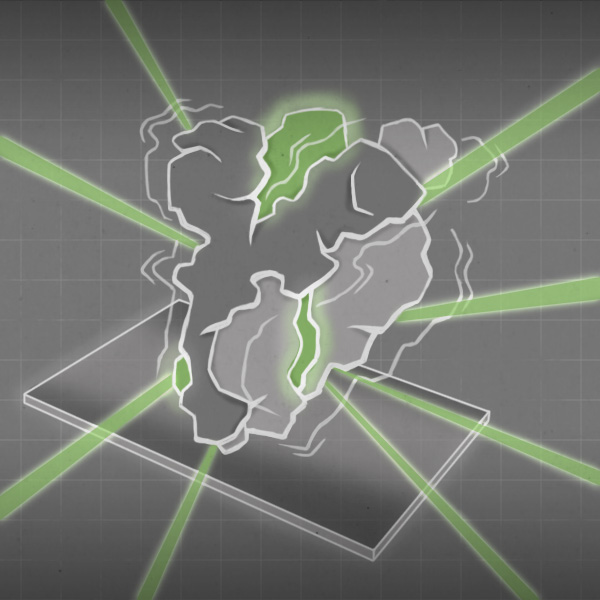 |
Toward a dynamics-based description of viral envelope glycoprotein functionEnveloped viruses enter cells by fusing the viral membrane with a cellular membrane. The energy needed to fuse membranes is contained entirely within the metastable conformation of viral envelope glycoproteins, which reside on the surface of the virion. This energy is liberated through a cascade of conformational changes that ultimately bring the viral and cellular membranes together. |
Representative PublicationDirect Visualization of the Conformational Dynamics of Single Influenza Hemagglutinin Trimers.
Das DK, Govindan R, Nikic-Spiegel I, Krammer F, Lemke EA, & Munro JB. Cell 174, 926-937.e12 (2018).
|
|
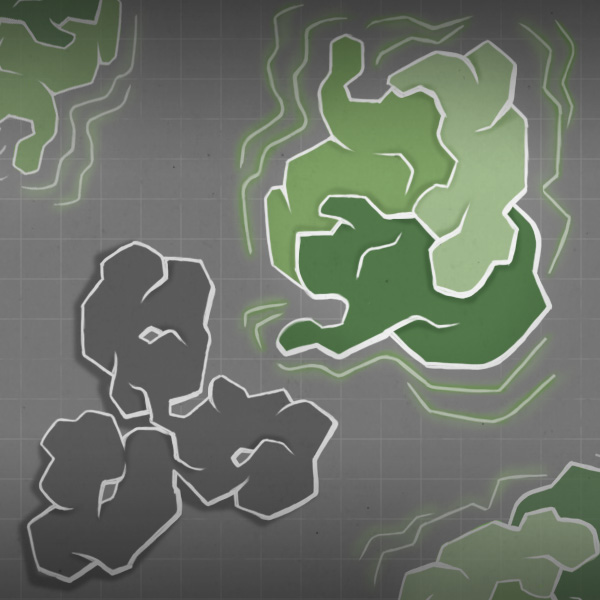
Understanding virus evolution and adaptation in terms of envelope glycoprotein conformational dynamicsFollowing zoonotic transmission, or in response to changing immune landscapes, viruses need to adapt to new environments. We aim to understand this adaptation through the lens of conformational dynamics. |
 |
Representative PublicationMolecular basis for the increased fusion activity of the Ebola virus glycoprotein epidemic variant A82V: insights from simulations and experiments.
Durham ND, Jain A, Howard A, Luban J, Munro JB. Cell Reports 44, 115521 (2025).
|
|
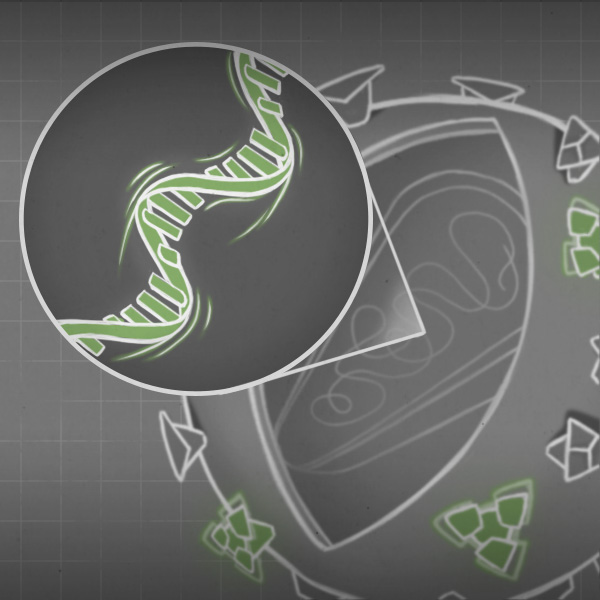 |
Dynamic processes inside virionsAlthough they remain hidden from the target cell and the immune response, dynamic proteins and RNAs inside virions play essential roles in virus replication. An important example is the role of Gag conformational dynamics and RNA folding during retroviral maturation. We are developing novel tools to probe molecular dynamics inside HIV virions and visualize their role in maturation and the mechanisms of antiretroviral action. |
Representative PublicationsStability and conformation of the dimeric HIV-1 genomic RNA 5′UTR.
Blakemore RJ, Burnett C, Swanson C, Kharytonchyk S, Telesnitsky A, and Munro JB. Biophysical Journal 120, 4874–4890 (2021).
|
|