
CAPES Scholars
Congratulations to all our CAPES Scholars! The goal of the CAPES Scholar program is to strengthen the suicide prevention workforce and foster the next generation of research-driven suicide prevention experts. This is accomplished through mentorship, training, collaboration, and networking opportunities. The Scholars program is led by the Education and Scientific Development Unit within CAPES. There are two types of CAPES Scholars:
Emerging Scholars include graduate students, postdoctoral researchers, and early-stage investigators who can work with and learn from CAPES Faculty. This will be done through formalized mentoring, in-house/guest didactics, and meetings with potential practice partners from new community settings.
Advanced Collaborating Scholars include scientists with suicide research experience who have not studied technologies, as well as those not previously engaged in suicide prevention research but with an established record of productivity in a complementary scientific field that offers new perspectives and methods to advance suicide prevention science.
Scholars will be awarded Center Faculty status, opening opportunities to propose investigator-initiated Pilot Projects and to access other institutional resources. Opportunities for scholars range from methodology summer “boot camps” through targeted seminars, the CTSA’s TL1 (for graduate students and postdocs), KL2 (for junior faculty) programs, and degree programs such as the Master of Science in Clinical investigations (MSCI). In addition, each emerging scholar will be eligible to receive up to $3,500 for approved research activities including conferences, trainings, and publication fees.
First Cohort
Established Scholars

Nancy Byatt, DO, MS, MBA
Dr. Byatt is a perinatal psychiatrist and physician-scientist focused on improving systems of care to promote the mental health of parents and children. Her passion is deeply rooted in her experiences as a clinician, researcher, daughter, and mother. She is a Professor with Tenure of Psychiatry, Ob/Gyn, and Population and Quantitative Health Sciences at UMass Chan Medical School. She developed the Massachusetts Child Psychiatry Access Program (MCPAP) for Moms. MCPAP for Moms is a statewide program that has 1) increased access to mental health care for thousands of perinatal individuals 2) become a national model for perinatal mental health care, and 3) impacted state and national policies and funding. She is the Founding Executive Director of the Lifeline for Families Center and Lifeline for Moms Program at UMass Chan Medical School. The Center’s activities include capacity building, consultation, and research. Dr. Byatt’s research uses implementation science methods to design, implement, and evaluate scalable approaches for improving parental and child mental health services and outcomes.
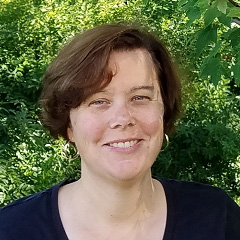
Linda Isbell, PhD
Dr. Isbell is a Professor of Psychology at the University of Massachusetts Amherst. Dr. Isbell’s research primarily examines the interaction between affect and cognition and focuses extensively on the impact of affective experiences on social cognitive processes. Her research aims to better understand the ways in which affect influences ordinary, everyday information processing and judgment across a number of important social psychological and real-world domains. Much of her research investigates the impact of affective experiences on how individuals seek out, process, and evaluate information about hypothetical political candidates, job applicants, ordinary people, stereotyped others, and the self. She is currently applying research on affect and information processing to understand how affect impacts medical decision-making by health care providers when treating individuals afflicted with mental health and substance use disorders. She specifically partners with the Interprofessional Center for Experiential Learning & Simulation (iCELS) to experimentally test these processes with medical students, physicians, and patient actors.
Emerging Scholars

Dominic Denning, BA
Dominic Denning is a doctoral student in the Clinical Psychology program at UMass Amherst, working under Dr. Katie Dixon-Gordon. His program of research focuses on the course, phenomenology, treatment/prevention, and assessment of self-damaging behavior (e.g., suicide, nonsuicidal self-injury, disordered eating), difficulties regulating emotions, and borderline personality disorder in understudied and underserved populations (i.e., men & LGBTQIA+).

Arielle C. Graham, MD
Arielle Graham was an Associate Professor at UMass Chan Medical School, specializing in psychiatry. She was a Psychiatrist in Pediatrics and the Emergency Mental Health Department at UMass Memorial Medical Center University campus and has since transitioned to be a Psychiatrist at Brigham and Women’s Hospital in Boston, MA.
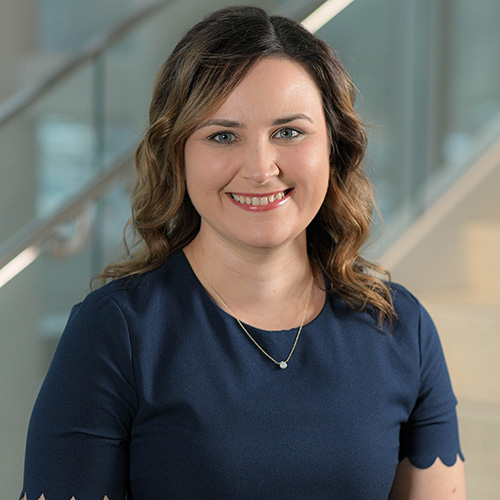
Lourah Kelly, PhD
Lourah Kelly is an Assistant Professor in the Departments of Psychiatry and Emergency Medicine at UMass Chan Medical School. Her PhD is in Clinical Psychology, awarded from Suffolk University in Boston, MA. Her program of research focuses on the intersection of substance use problems and suicide risk, particularly among young people and digital health interventions for this age group. She is Principal Investigatory of a K99/R00 Pathway-to Independence Award, funded by the National Institute on Alcohol Abuse and Alcoholism. This project includes intensive mentorship, training, and aims to develop an avatar-guided digital health intervention for young adults with alcohol use problems and suicidal thoughts who present to the emergency department.

Martha Zimmermann, PhD
Martha Zimmermann is an Assistant Professor in Psychiatry at UMass Chan Medical School. Her PhD is in Clinical Psychology, from University of Nevada, Reno. She partners with Dr. Nancy Byatt in Massachusetts Child Psychiatry Access Program for Moms. Her research focuses on developing scalable interventions to prevent perinatal mood and anxiety disorders particularly using digital health technologies. She was also chosen as one of the PIs of the CAPES Pilot Projects entitled “Beta-Testing Reaching Calm: Exploring Digital Approaches to Address Suicide Risk in Obstetric Settings”.
Second Cohort
Established Scholars

Benjamin Nephew, PhD
Dr. Nephew works with Dean Jean King at Worcester Polytechnic Institute (WPI). Their program of research is focused on identifying and studying neurobehavioral mechanisms of mental illness and developing effective interventions. Recent projects include using functional MRI (fMRI) to identify the neural correlates of mindfulness-based stress reduction as part of a stage IIa randomized clinical trial, and using fMRI data combined with related clinical measures to develop machine learning based early predictors of severe depression and suicidality. He developed a transgenerational social stress based rodent model of postpartum depression/anxiety, and related clinical work explores the role of behavioral hormones, discrimination, and epigenetic changes in postpartum depression/anxiety. His current focus is on applying machine learning with an array of biopsychosocial data from a clinical trial to predict the response to a mindfulness intervention for chronic low back pain. He is also involved in a project using machine learning to predict anxiety, depression, and suicidality in middle and high school students, and an associated initiative is exploring the impact of social media on youth mental health.
Emerging Scholars
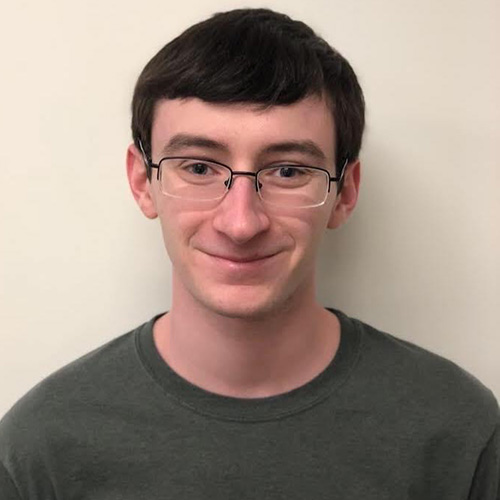
Nicholas Josselyn
Nicholas is a Research Assistant and PhD Candidate at Worcester Polytechnic Institute (WPI) and UMass Chan Medical School Collaborator working with Elke Rundensteiner of CAPES. He also collaborates with Dr. Feifan Liu on the CAPES ADAPT project for identifying individuals at risk of suicide using machine learning techniques.
Nicholas has a BA in Physics from Wheaton College in Norton, MA and a MS in Data Science from WPI. He has a passion for applying machine and deep learning techniques to solve real-world problems, specifically in the healthcare domain.
Richard Lopez, PhD
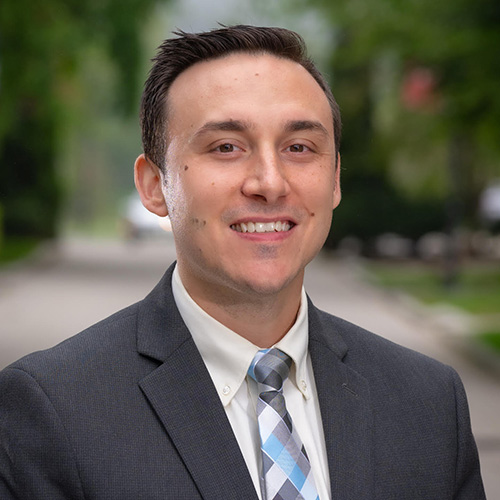
Dr. Lopez is a social neuroscientist and Assistant Professor of Psychology and Neuroscience at Worcester Polytechnic Institute (WPI). He investigates the psychological and neural mechanisms underlying emotion regulation to improve health and wellbeing in daily life. His Social Neuroscience of Affective Processes (SNAP) Lab at WPI develops personalized, psychologically informed interventions aimed at improving young people's mental health. Recently, the SNAP Lab has identified psychological factors linked to social media use that could be targeted in interventions to reduce anxiety and depression. As a CAPES scholar, Dr. Lopez is eager to expand his research program, collaborating with clinicians to enhance understanding of suicide prediction and prevention, with a particular focus on early, technology-based intervention strategies.

Kathryn Sabella, PhD
Dr. Sabella is an Assistant Professor at UMass Chan Medical School in the Department of Psychiatry and Deputy Director of the Implementation Science and Practice Advances Research Center (iSPARC). She is one of only a few national scholars in young adult mental health and has emerged as one of the leading experts in the field. Her research employs qualitative and quantitative methods and community based participatory methods to a) create new knowledge about the needs and experiences of young adults with serious mental health conditions, and b) apply that knowledge to the development, testing, and implementation of age-appropriate and culturally appealing evidence-based practices that can improve the lives of these young adults. She is Co-PI of the Center for Community Inclusion and Reflective Collaboration that seeks to improve community participation outcomes among young adults with mental health conditions from backgrounds that have been marginalized (NIDILRR/ACL/HHS# 90RTCP0010).

Xihan Yang, PhD
Dr. Yang is as a Postdoctoral Fellow at the Family Resilience and Child Development (FRCD) lab at the iSPARC, working under Dr. Shaobing Su. Her research focuses on intersectional effects of neurodiversity and cultural diversity. With practical experiences working at the special education field and with the immigrant population, she prioritizes culturally responsive research methodologies and are sensitive to the cultural contexts of participants. She intends to explore the adaptations of materials and technologies to make them more accessible and appropriate for marginalized populations with different cultural backgrounds.
Third Cohort
Established Scholars

Hoa L. Nguyen, MD, MS, PhD
Hoa Nguyen, MD, MS, PhD, is a professor in the Department of Population and Quantitative Health Sciences, Division of Epidemiology. She is also an honorary professor at the Hanoi Medical University in Vietnam. She is a physician by training and epidemiologist with more than 20 years of experience in chronic disease epidemiology, behavioral intervention development, and implementation for improving non-communicable diseases and related risk factors in the U.S. and in low- and middle-income countries. Dr. Nguyen has been principal investigator (PI) and co-investigator for several NIH-funded studies conducted in Vietnam, aiming to improve the management and control of hypertension (R21, U01, R61/R33), coronary heart disease (R21), smoking cessation among the general population and people living with HIV (R01 and U01), and Alzheimer's (funded by the American Alzheimer's Association). She is also a multi-PI for an NIH/Fogarty-funded Program for Strengthening Research and Training in Non-Communicable Diseases in Vietnam (1D43) and the renewal program—Strengthening Training and Research Initiatives for Vietnam to Effectively Managing Non-Communicable Diseases (STRIVE-NCD) (2D43). She currently serves as a co-investigator for an MH-funded R34 study entitled “Optimizing mobile interventions to promote HIV prevention among Thai vulnerable emerging adults.” Currently, Dr. Nguyen is exploring opportunities to expand her research to other areas, such as mental health, particularly in suicide prevention, in which she will adapt our effective Storytelling and mHealth interventions in hypertension control and smoking cessation to improve population mental health.
Emerging Scholars

Alan J. Ardelean, MS
Alan Ardelean is a doctoral student in the Population Health Sciences PhD program in the Morningside Graduate School of Biomedical Sciences at UMass Chan. He is mentored by and works with Kate L. Lapane, PhD, MS, focusing his dissertation on the association between psychoactive drug use and suicide-related outcomes among U.S. nursing home residents. As a CAPES Emerging Scholar, he is mentored by Edwin D. Boudreaux, PhD and has co-authored secondary analyses of the ED-SAFE data examining profiles of patients with incidental suicide risk who present to the emergency department. Through this program, Alan aims to strengthen the conceptual framing, methodological rigor, and translational relevance of his dissertation research and to integrate his doctoral training in pharmacoepidemiologic methods into suicide prevention research more broadly.
Daniel Coppersmith, PhD
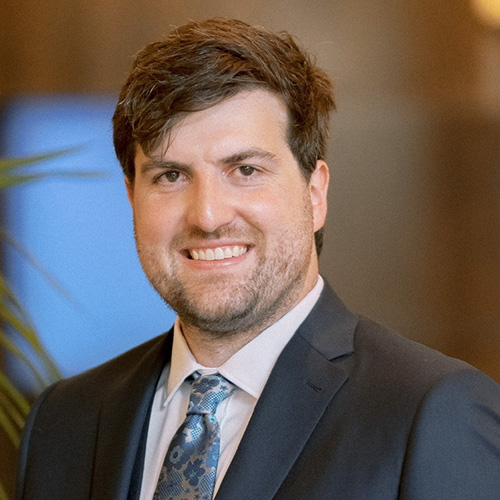
Daniel Coppersmith, PhD, is an assistant professor in the Department of Psychological and Brain Sciences at the University of Massachusetts Amherst and the director of the Suicide Prevention Research Laboratory. His research program aims to advance the understanding, prediction, and prevention of suicide. His research is grounded in the theoretical orientation that suicidal thoughts and behaviors are dynamic, complex, and heterogeneous and he use new technologies, such as smartphones and wearable biosensors, to capture and model these factors. The goal of his program of research is to improve the lives of individuals with suicidal thoughts and behaviors. He earned his PhD in clinical psychology from Harvard University and completed clinical training at McLean Hospital, Massachusetts General Hospital, and the VA Boston Healthcare System. His research has been funded by the National Institute of Mental Health, National Science Foundation, and the American Psychological Foundation.

Kaidi (Candice) Huang, MS
Kaidi (Candice) Huang is a PhD student in Information Systems at Worcester Polytechnic Institute. Her research is driven by an interest in improving suicide prevention through better alignment between evidence-based screening and the realities of clinical care. She studies how clinicians interact with the electronic health record (EHR) and embedded clinical decision support during patient care, and how workflow, timing, and usability shape whether risk information is noticed and acted upon. Using qualitative methods, workflow analysis, and eye-tracking techniques, she aims to generate practical, workflow-sensitive insights that can improve the design and implementation of suicide screening and digital mental health tools in primary care and other healthcare settings. As a CAPES Emerging Scholar, she looks forward to learning from the community and contributing to research that supports timely, meaningful, and sustainable suicide prevention practices in real-world clinical environments.

Ramya Ramadurai, MA
Ramya Ramadurai, MA is a 6th year clinical psychology doctoral candidate at American University and a current predoctoral intern at Harvard Medical School/McLean Hospital. Her translational research program focuses on two interconnected lines of work: 1) identifying affective and interpersonal predictors of suicidality; and 2) developing, evaluating, and implementing digital and brief psychotherapy interventions to reduce suicidality and promote living. She takes a person-centered approach, incorporating social identity and related stress to both lines of work, to promote the cultural responsivity of suicide care. Clinically she is passionate about supporting transdiagnostic adults navigate significant emotional challenges and suicidality and has particular experience delivering Dialectical Behavioral Therapy. Ramya is thrilled to be joining the 2026-2027 CAPES Emerging Scholars program as an incoming CAPES postdoctoral fellow.