

Research
Host-pathogen interactions and bacterial pathogenesis
The overarching goal of our research program is to define evolutionarily ancient mechanisms of host-pathogen interactions in intestinal epithelial cells. In particular, we are intrigued by the hypothesis that cells at mucosal surfaces, which interface with both potentially dangerous and innocuous microbes, survey for symptoms or ligands that indicate active infection – or patterns of pathogenesis – to engage protective inflammatory defenses (Nature Reviews Immunology 2025).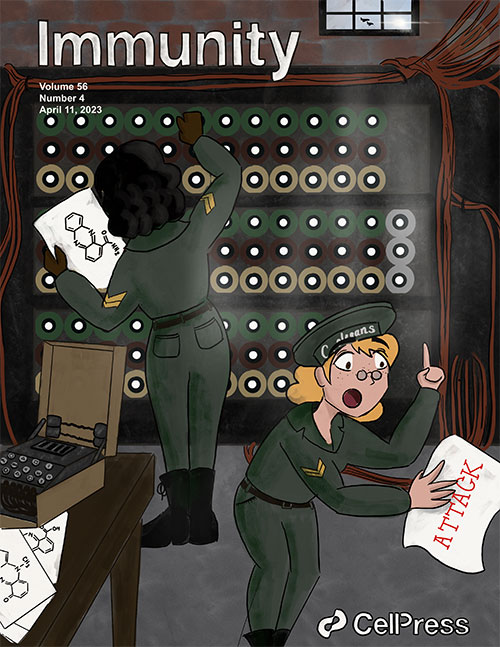
Intruigingly, the nematode C. elegans relies on the surveillance of microbial patterns of pathogenesis to identify pathogen infection. C. elegans live in microbe-rich environments and eat bacteria as their source of nutrition. Thus, the ability to distinguish an ingested pathogen from innocuous bacteria is a matter of life and death for nematodes. In an environment teeming with microbes, physical surveillance of microbes (or pattern recognition) cannot be an effective way to identify pathogen infection. Thus, C. elegans lost the canonical pattern recognition in evolution. And yet, nematodes are still able to mount pathogen-specific immune defenses. Thus, the study of host-pathogen interactions in C. elegans is uniquely suited to identify mechanisms of pathogen sensing that allow host cells to identify active infection, rather than simply the presence of a potentially infectious microorganism.
The utility of C. elegans to characterize bacterial patterns of pathogenesis is illustrated by several discoveries from our group. First, we characterized a non-canonical pattern recognition system in C. elegans intestinal epithelial cells that intercepts pathogen-derived signals of growth and virulence to assess the relative threat of virulent bacteria and activate innate immunity (Immunity 2023 and PLOS Genetics 2019). Second, we showed in companion papers (Immunity 2024 and Cell Reports 2024) that the immune regulator sterile alpha and Toll/interleukin receptor motif-containing 1 (SARM1), whose role in pathogen sensing is conserved across the tree of life (Trends in Immunology 2025), is a guard protein in an effector-triggered immune response, which enables intestinal epithelial cells in the nematode C. elegans to identify pathogen-induced cell damage. This work followed our earlier characterization of p38 immune pathway activation, which occurs through multimerization and a phase transition of SARM1 (eLife 2022). Collectively, our work suggests that sensing patterns of pathogenesis are among the most primordial and fundamentally important principles of innate immune sensing in the animal branch of the tree of life. 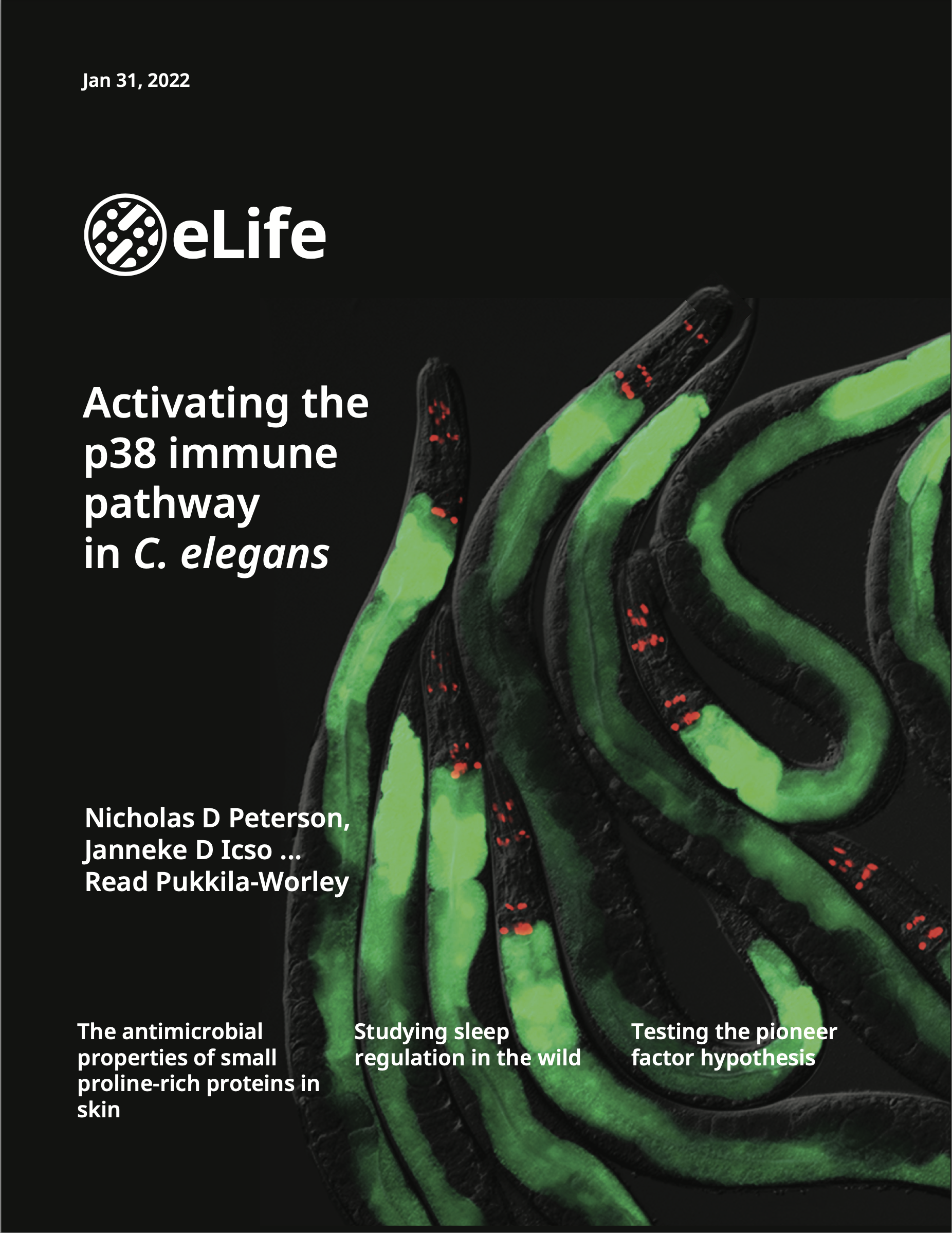 Our laboratory also has a longstanding interest in defining the immunometabolic mechanisms necessary for pathogen defense and immune regulation. We characterized requirements for a novel sphingolipid catabolic pathway (PLOS Pathogens 2023) and the monounsaturated fatty acid oleate (PLOS Pathogens 2019) for hosts to survive challenges from infectious pathogens. In addition, we characterized a signaling axis that coordinates pathogen responses, lipid homeostasis, and survival, and identified transcriptional redirection, rather than inactivation, as a mechanism for counteracting the pleiotropic consequences of aberrant transcriptional activity (PNAS 2019). Finally, we discovered an unexpected connection between neuronal development and innate immunity, which revealed that anti-pathogen defenses in the intestine are developmentally programmed (Cell Reports 2020).
These studies have led us to focus on three principal areas of current interest: 1) Identification of novel patterns of pathogenesis, including how hosts sense specific pathogen-induced metabolic changes to identify microbial infection. 2) TIR-1/SARM1. We take cell and molecular biological approaches to characterize new mechanisms of regulation and function of this enzymatic TIR protein, which is among the most fundamental and ancient immune regulators in the Tree of Life. 3) Lipid metabolism and immune activation. We are defining the genetic links between lipid metabolism and the activation of protective immune defenses.
Together, these efforts are uncovering fundamental principles of immune homeostasis involving conserved immune regulators that we are applying to mammalian biology using cell culture and mouse genetics.