Click hereto access the previously presented slides and recordings. At this time, only internal staff have access to these slides.
4/9/2027,Noon - 1:00, Zoom Qualitative Research Office Hours
Discussion: Qualitative Analysis Software Options. What software have you used? What are its strengths? We will share our experiences and 2 guests who have used MaxQDA, Dr. Christina Silver from Qualitative Data Analysis Services (UK) and Dr. Tim Guetterman from the University of Michigan, will join in.
This is an open online meeting for all interested in qualitative research methods, where participants may choose to present to other qualitative researchers their research project, proposal, manuscript, or idea for discussion and feedback. A short basic methods presentation will also be planned, such as using conceptual models, immersion/crystallization, or developing a coding structure.
Schedule - Office Hours are scheduled 12-1pm on the second Friday of the months of October, December, February, and April. Sign Up - To reserve time to present your project email Qual.Interest.Group@umassmed.edu at least 3 days in advance (by Tuesday 12n).
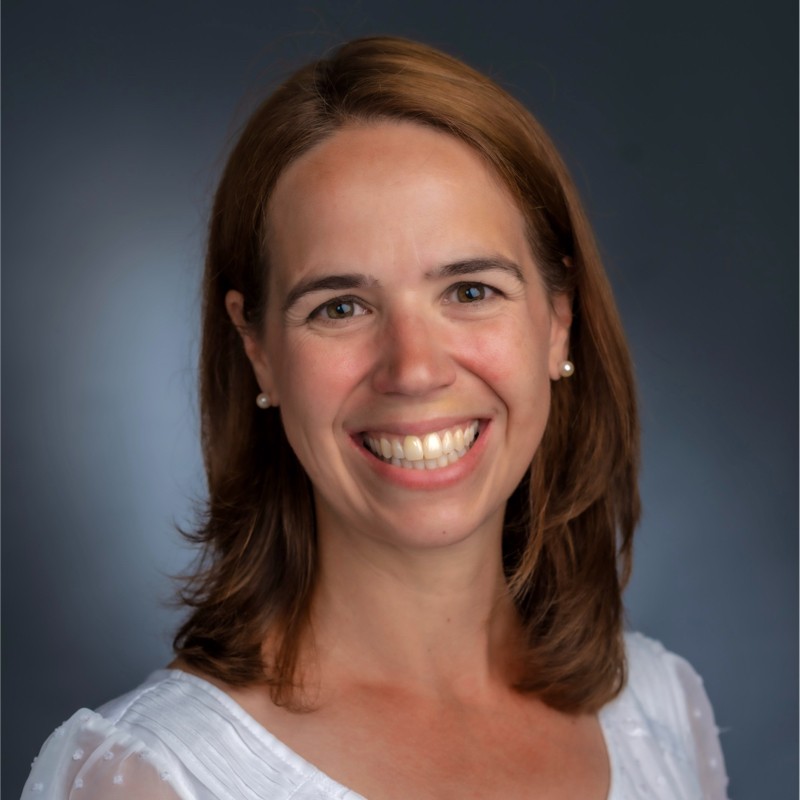
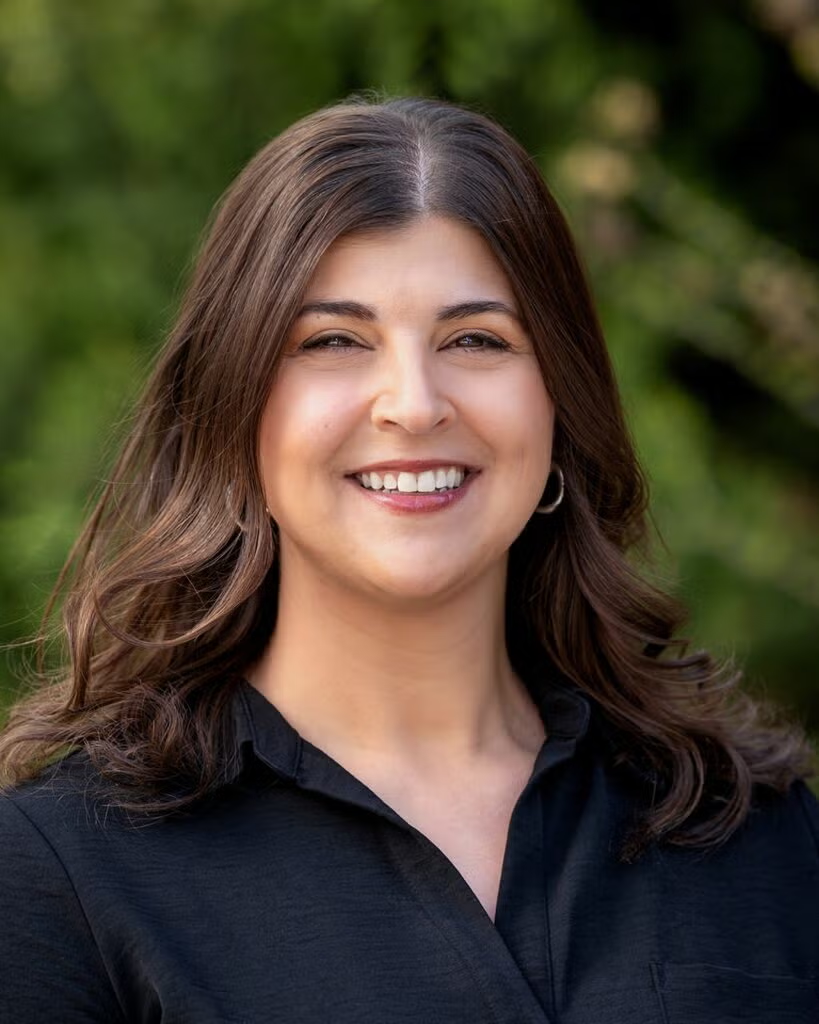
Suzanne Morrissey, PhDArwen Bunce MA, OCHIN
3/18/2027, Noon - 1:00, Zoom Title: Realist Evaluation Presenters: Dr. Suzanne Morrissey, UMass Chan and Arwen Bunce MA, OCHIN (a national nonprofit consultancy), Portland, OR
Details coming soon!
2/12/2027,Noon - 1:00, Zoom Qualitative Research Office Hours
Discussion: Imposter Participants. How to guard against ineligible participants infiltrating your study. Drs. Yiyang Yuan and Melissa DuBois who have tackled this problem will participate in the discussion.
This is an open online meeting for all interested in qualitative research methods, where participants may choose to present to other qualitative researchers their research project, proposal, manuscript, or idea for discussion and feedback. A short basic methods presentation will also be planned, such as using conceptual models, immersion/crystallization, or developing a coding structure.
Schedule - Office Hours are scheduled 12-1 PM on the second Friday of the months of October, December, February, and April. Sign Up - To reserve time to present your project email Qual.Interest.Group@umassmed.edu at least 3 days in advance (by Tuesday 12 noon).
Jennifer Costa, PhD
1/15/2027, Noon - 1:00, Zoom Title: Phenomenology Presenter: Dr. Jennifer Costa, Dana Farber/Harvard
Details coming soon!
12/11/2026, Noon - 1:00, Zoom Qualitative Research Office Hours
Discussion: Use of AI in Qualitative Research. Share your views and experiences. This is an open online meeting for all interested in qualitative research methods, where participants may choose to present to other qualitative researchers their research project, proposal, manuscript, or idea for discussion and feedback. A short basic methods presentation will also be planned, such as using conceptual models, immersion/crystallization, or developing a coding structure.
Schedule - Office Hours are scheduled 12-1 PM on the second Friday of the months of October, December, February, and April. Sign Up - To reserve time to present your project email Qual.Interest.Group@umassmed.edu at least 3 days in advance (by Tuesday 12 noon).
Anne Abbott, PhD MPP
11/20/2026, Noon - 1:00, Zoom, click here to register Title: Qualitative Participatory Research” Presenter: Anne Abbott, PhD MPP, Assistant Professor, Boise State University, School of Public and Population Health Abstract: Participatory Research engages individuals, groups and communities in the research process. In qualitative research, participants collaborate in the design stage, analysis, dissemination and knowledge transfer. This approach not only empowers participants but also facilitates discovery of practical solutions that have both validity and value to the population under study. Focusing on her work in youth violence prevention, Dr. Abbott will address methodological considerations when using this approach. She will describe the unique qualities of participatory approaches including best uses and what makes it different from other qualitative traditions. She will also demonstrate the process employed and how she has applied this method to her own research. Bio: Dr. Abbott spent nearly a decade as the Program Director for Public Health Evaluation at the University of Iowa School of Social Work. She has also worked in policy and advocacy for various child and youth-serving organizations in Washington DC. Dr. Abbott’s research focus is in public health communication, health promotion, program planning/evaluation and policy.
10/9/2026, Noon - 1:00, Zoom Qualitative Research Office Hours
Discussion: IRB Considerations for Qualitative Studies. Dr. Jes Pagano-Therrien (IRB Chair) will be attending to answer your questions.
This is an open online meeting for all interested in qualitative research methods, where participants may choose to present to other qualitative researchers their research project, proposal, manuscript, or idea for discussion and feedback. A short basic methods presentation will also be planned, such as using conceptual models, immersion/crystallization, or developing a coding structure.
Schedule - Office Hours are scheduled 12-1 PM on the second Friday of the months of October, December, February, and April. Sign Up - To reserve time to present your project email Qual.Interest.Group@umassmed.edu at least 3 days in advance (by Tuesday 12 noon).
Katie Sveinson, PhD
9/25/2026, Noon - 1:00 Zoom, click here to register Title: Introduction to Discourse Analysis as Theory and Methodology Abstract: Communication in our multimodal world goes beyond spoken words and written text. Images, videos, symbols, icons, body language, sound, music, body language, and physical arrangements make unique contributions to effective messaging. Discourse analysis allows for the study of these elements of communication in social processes. With a focus on meaning-making, discourse analysis highlights how the relationship between language and what language represents is far from straightforward (Gee, 2011; Sveinson, 2026). This approach offers opportunities to investigate and to be conscious of artifacts that may communicate (un)intended and implicit messaging that may reveal hidden assumptions and power structures encoded in common documents. It goes past literal words to show how other aspects of messaging content may shape beliefs and behaviors. In this talk, Dr. Sveinson will discuss the inextricably linked theory, methodology, methods, and analysis of discourse analysis, with a focus on the uniqueness of this approach compared to other qualitative methodologies. Emphasis will be placed on how this work links micro-level language use to macro-level structures. Examples of her work will be provided as well as suggested areas of interest to utilize this approach. Bio: Dr. Sveinson has published 13 articles utilizing (critical) discourse analysis, including empirical pieces, methodological perspectives, and scoping reviews and has received the Isenberg School of Management Outstanding Research Award. She serves on the editorial boards of the Journal of Sport Management, Sport Management Review, and Sociology of Sport Journal and is a NASSM Research Fellow.
Heidi M. Levitt, PhD
4/24/2026, Noon - 1:00, Zoom Title: An Introduction to Critical-Constructivist Grounded Theory - Considerations of Methodological Integrity Abstract: Methodological integrity is a concept that was developed to encourage researchers to design methods by thinking about their capacity to reflect the specific phenomenon under study and to produce meaningful findings (Levitt et al., 2017). This concept is central in standards for qualitative research and is used by journal editors to evaluate qualitative studies. In this talk, Dr. Levitt will describe the method of Critical-Constructivist Grounded Theory (Levitt, 2021), a form of grounded theory that is tailored to the understanding of both internal/interpersonal, and cultural/systemic meanings, and will discuss its features that enhance methodological integrity. Bio: Dr. Levitt is Editor-in-Chief of Qualitative Psychology and past-president of the Society of Qualitative Inquiry in Psychology (SQIP), section of Division 5 of the American Psychological Association. She chaired the development of the SQIP recommendations for reviewing and designing qualitative research (Levitt et al., 2017). Dr. Levitt also chaired the development of the inaugural APA Journal Article Reporting Standards for qualitative, qualitative meta-analytic, and mixed methods research (JARS-Qual; Levitt et al., 2018). In 2020, she received the University of Massachusetts Boston Chancellor’s Award for Distinguished Scholarship as well as the Distinguished Contributions in Qualitative Inquiry Award from APA Division 5 for a distinguished history of scientific contributions within the field of qualitative research methods.