

Quality Improvement
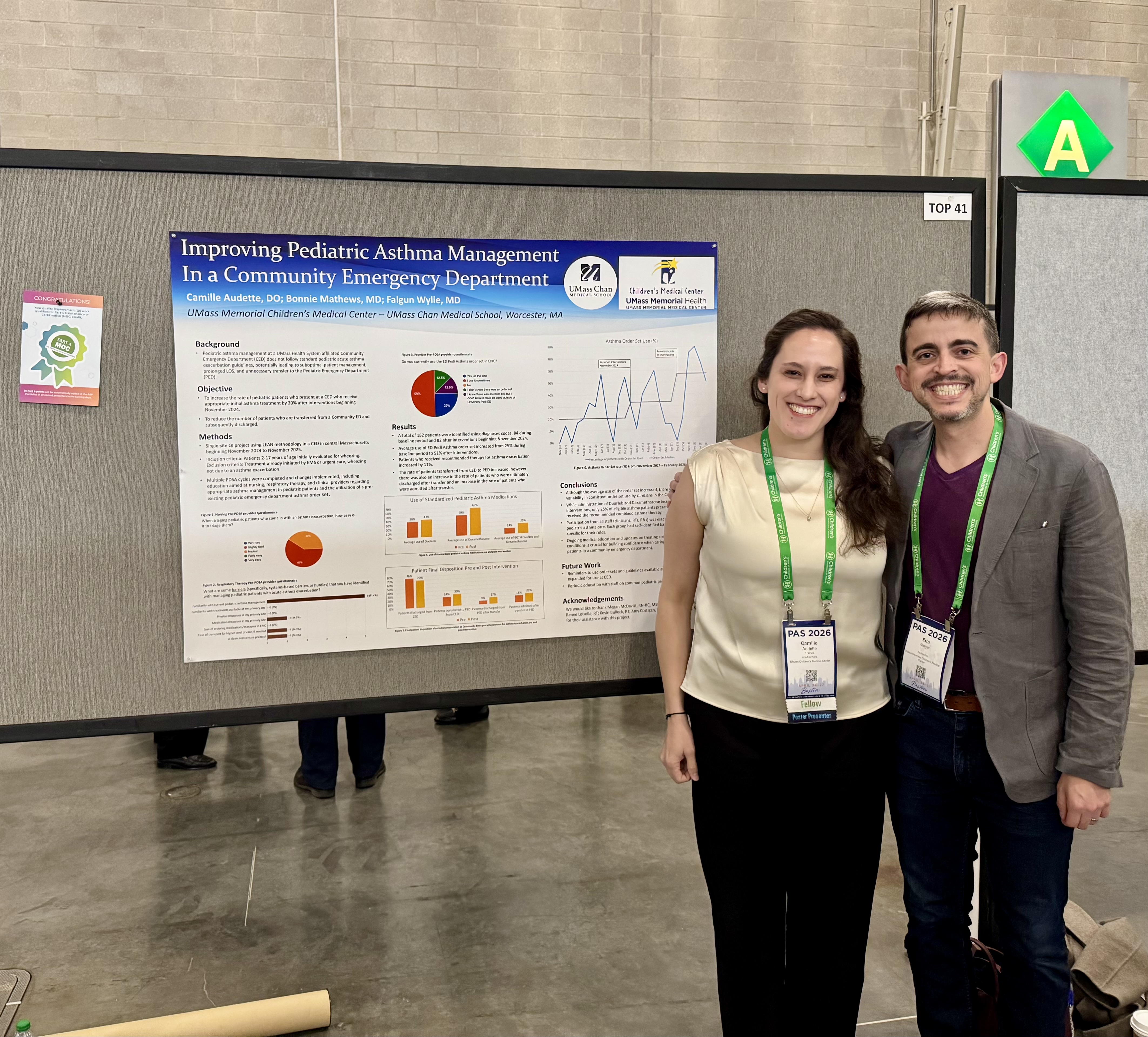 In the high-stakes environment of pediatric emergency medicine, understanding and applying quality improvement (QI) methodologies is essential to closing the gap between the care we provide and the care our patients deserve, transforming everyday clinical challenges into opportunities for measurable and lasting change. QI is an integral part of pediatric emergency medicine fellowship education. Through a longitudinal curriculum, fellows design and complete a rigorous QI project of their own over the course of their fellowship. After completing the QI curriculum, fellows will be well-equipped to apply QI methodology to solve the everyday problems they encounter in their clinical environment.
Consistent with UMass Chan GME and ACGME expectations, all trainees are required to participate in a QI initiative as part of the Clinical Learning Environment program. Fellows are trained early in their first year in Lean methodology, the quality improvement framework used throughout the UMass health care system. Lean provides a systematic approach to evaluating patient care and identifying effective and sustainable solutions. As part of the fellowship QI curriculum, fellows will receive their Lean white belt. Fellows interested in advanced QI training may pursue additional certification, including black belt certification, through the Interprofessional Trainee Quality Council (ITQC), sponsored by UMass Chan GME.
Fellows are encouraged to identify an area for improvement in their clinical environment and, with guidance from experienced faculty mentors, develop a project plan grounded in Lean principles. Fellows work alongside their mentors to implement their QI initiative, learning each step of Lean methodology along the way and seeing their idea through from concept to completion. Upon completing their project, fellows are encouraged to share their findings with the broader medical community by presenting at local and national conferences. Past fellow projects have been recognized by UMass Memorial Medical Center for their strong focus on patient care and their impact in driving meaningful change. Several fellow projects have gone on to earn recognition from quality improvement experts at national conferences. These accomplishments reflect the program's ongoing commitment to fostering meaningful high-impact QI work.
Multiple faculty members in the Division of Pediatric Emergency Medicine are Lean-trained and serve as QI mentors to fellows and residents, in addition to leading their own quality improvement initiatives. The division hosts a monthly QI working group, where faculty and fellows learn more about QI methodology, workshop new QI ideas, and present and receive feedback on ongoing QI projects.
By the end of fellowship, trainees will have a strong foundation in QI methodology and hands-on project experience, equipping them to continue driving meaningful improvements in patient care throughout their careers.