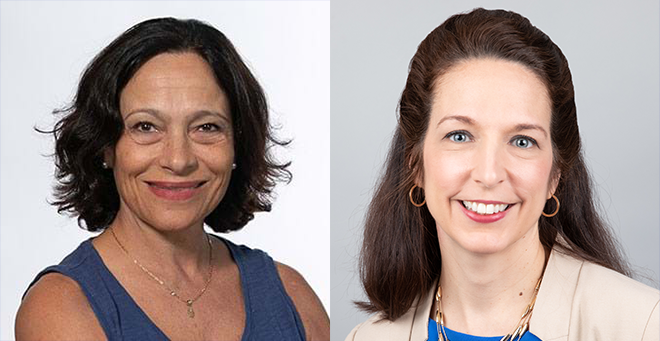


Photo: Bryan Goodchild
As rates of type 2 diabetes continue to rise among younger adults, more people are entering pregnancy already managing a chronic condition that can affect both parent and baby. At UMass Chan Medical School, researchers and clinicians are working to better understand how to support these patients before, during and after pregnancy.
“We’re seeing a growing prevalence of type 2 diabetes in pregnancy,” said Gianna Wilkie, MD’16, MSci’22, assistant professor of obstetrics & gynecology. “Ten years ago, our clinic was mostly for patients with gestational diabetes. Now, many more have preexisting diabetes.”
The change mirrors broader public health trends, with type 2 diabetes increasingly diagnosed in younger adults, including people of reproductive age.
Balancing risks for parent and baby
Diabetes during pregnancy can introduce a range of risks, particularly if blood sugar levels are not well controlled. Early in pregnancy, high blood sugar increases the likelihood of birth defects, including heart and neural tube abnormalities.
Later, it can affect how a baby grows.
“Uncontrolled diabetes can contribute to babies being either very large or very small,” Dr. Wilkie explained. “And after birth, babies may have trouble regulating their blood sugar, temperature or breathing.”
For the pregnant parent, risks include complications such as preeclampsia, difficult deliveries and a higher likelihood of cesarean section. At the same time, managing diabetes becomes more complex during pregnancy due to hormonal changes that increase insulin resistance.
“Our goal is to optimize blood sugar control and give both the patient and baby the best chance at a healthy outcome,” she said.
Rethinking how care is delivered
At UMass Chan, ongoing research is exploring how new tools and strategies might improve outcomes.
One study compares traditional finger-stick glucose monitoring with continuous glucose monitors (CGMs), which are wearable devices that track blood sugar in real time. Researchers hope to determine whether CGMs can reduce complications, such as fetuses growing too large.
“Continuous glucose monitors weren’t even approved for use in pregnancy until recently,” Wilkie said. “So even something that feels standard now is actually very new in this space.”
Another area of focus is what happens after delivery. Patients who develop gestational diabetes face a higher lifetime risk of type 2 diabetes, and clinical guidelines recommend follow-up testing postpartum. But in practice, many patients never complete it.
“You’re caring for a newborn, you’re exhausted, and then you’re asked to come back fasting and spend hours in a lab,” she said. “It’s not surprising that many people don’t do it.”
To address this, Wilkie and the team are piloting a new approach: offering the test in the hospital within the first days after delivery. Early findings suggest patients are far more likely to complete screening when it’s built into care they’re already receiving.
The question of newer medications
Beyond monitoring, researchers are also examining how newer diabetes medications might fit into pregnancy care.
Drugs known as GLP-1 receptor agonists, widely used for diabetes and weight management, have gained significant attention in recent years. But their safety during pregnancy remains unclear.
“We just don’t have enough data yet,” Wilkie said. “For now, we generally recommend discontinuing them during pregnancy.”
The lack of data reflects a longstanding issue in maternal health research: pregnant patients are often excluded from clinical trials.
“I always feel like we’re a little bit behind other fields,” she said. “There are many medications that are widely used in other populations, but we don’t know if they’re safe in pregnancy.”
Still, early research offers cautious optimism. In one analysis of national data, researchers found no strong signals of major risks associated with GLP-1 exposure, though some findings warrant further study.
“In an ideal world, we’ll have clearer answers in the next few years,” said Wilkie.
A team-based approach
For patients, managing diabetes in pregnancy can feel overwhelming. Frequent monitoring, medication adjustments and multiple weekly appointments, especially later in pregnancy, can quickly add up.
“Having diabetes in pregnancy can feel like a full-time job,” she said.
That’s why she emphasizes early planning and close collaboration with care teams.
For those considering pregnancy, meeting with specialists ahead of time can help optimize health and adjust medications if needed. For those already pregnant, regular communication with providers is key to creating a plan that fits into daily life.
“We know this isn’t easy,” she said. “But working closely with your care team—early and often—can make a real difference.”
Looking ahead
As research continues, the goal is not just to improve outcomes, but to make care more practical and accessible for patients.
Researchers hope tools such as wearable glucose monitors and more flexible postpartum testing can make care easier to navigate during pregnancy and after delivery.
“There are still so many unanswered questions,” explained Wilkie. “But every step forward helps us better support patients and their families.”